
Acoustic Performance and Workplace Expansion: Supporting Modern Offices Across Vietnam
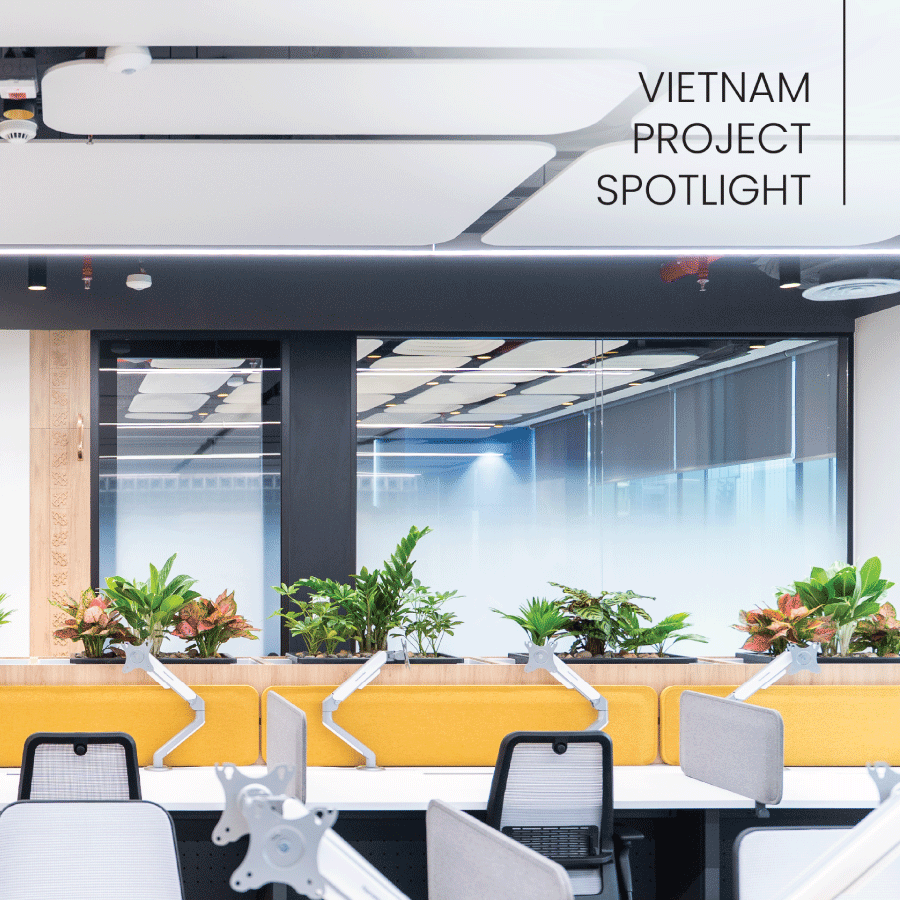
As workplace strategies continue to evolve across Asia Pacific, companies are rethinking how office environments can better support productivity, collaboration, and employee wellbeing at the same time.
A couple of growing priorities are acoustic performance and supporting modern office.
In modern office environments, open collaboration is important, but so is the ability to focus, conduct meetings privately, and reduce unwanted noise throughout the workspace. As organisations expand regionally, the expectation for workplaces to balance openness with functionality has become significantly more important.
A recently completed expansion project in Vietnam for a leading global telecommunications and technology company reflects this shift clearly. The project incorporated acoustic glazing systems with Sound Transmission Class (STC) rating of 45, allowing the workplace to maintain visual openness while improving acoustic separation between meeting spaces, collaborative zones, and focused work areas.
For many corporate workplaces today, acoustic design is no longer treated as an afterthought. Studies have consistently shown that excessive workplace noise impacts concentration, productivity, and employee satisfaction. In high-performance office environments, acoustic comfort plays a direct role in how effectively teams communicate and work together.
This is where acoustic glass partition systems continue to gain relevance in workplace design.
Unlike traditional enclosed construction, acoustic glazing systems allow organisations to preserve natural light, transparency, and spatial flexibility while still achieving strong sound insulation performance. Higher STC-rated systems help minimise sound transfer between rooms, creating more comfortable environments for meetings, focused discussions, and day-to-day operations. Beyond product performance, delivering projects across regional markets introduces another layer of complexity.
Every market operates differently. Regulations, timelines, project coordination, and site expectations vary across countries, requiring teams to adapt quickly while maintaining consistency in quality and execution.
For regional workplace projects, successful delivery depends not only on technical capability, but also on communication, responsiveness, and understanding how to operate effectively across borders.
As more companies continue expanding throughout Southeast Asia, workplace environments are expected to do more than simply accommodate teams. Offices are increasingly designed to enhance collaboration, support employee wellbeing, strengthen workplace culture, and adapt to changing ways of working.
This growing demand is shaping the future of workplace design across the built environment industry.
Acoustic performance, flexibility, sustainability, and regional scalability are no longer separate conversations. They are becoming part of the same expectation for modern workplaces across Asia Pacific.
Projects like this reflect how workplace environments are continuing to evolve — not just in how they look, but in how they perform every day.


